
```json
Title: Crypto Bloodbath: $1.27 Billion Liquidated - Is This the End, or Just a Reset?
Bitcoin's recent plunge isn't just a blip; it's a $1.27 billion wake-up call for leveraged crypto traders. Monday's drop from $112,000 to under $106,000 triggered mass liquidations, with long positions bearing the brunt of the damage. CoinGlass data shows that nearly 90% of liquidated positions were longs, translating to a staggering $1.14 billion wiped out in bullish bets. Shorts? A comparatively paltry $128 million. This wasn't a correction; it was a massacre.
The Anatomy of a Crypto Crash
Liquidations, for those unfamiliar, are the automatic closures of leveraged positions when a trader's margin can't cover losses. Crypto exchanges, in their infinite wisdom (or ruthlessness), sell these positions to cover the shortfall. The result? A cascading effect that amplifies price swings, especially in thin markets. The single largest liquidation occurred on HTX, a $33.95 million BTC-USDT long position. Hyperliquid led in overall activity, with $374 million in forced closures, 98% of which were longs. Bybit followed at $315 million, and Binance at $250 million.
What caused this carnage? Bitcoin's rejection above $113,000 combined with thin order books, particularly during low-liquidity hours, created a perfect storm. It's the crypto equivalent of a flash crash, where a lack of buyers exacerbates the sell-off. These events, as the saying goes, are "clearing moments," where leverage is reset, and (supposedly) spot buyers step back in. But is it really that simple? Open interest remains near $30 billion, and funding rates have barely budged. (Funding rates are periodic payments exchanged between traders based on the difference between the perpetual contract price and the spot price. Positive rates indicate that longs are paying shorts, reflecting bullish sentiment, and vice versa.) Traders remain wary, especially with the Federal Reserve's rate decision looming.
Solana's Struggle: A Microcosm of Market Fear
The pain wasn't limited to Bitcoin. Ethereum and Solana saw combined liquidations exceeding $300 million, and most altcoins followed suit. Solana, in particular, is flashing warning signs. The SOL price has weakened, dropping over 8% amid low trading volume. It's breached a crucial support level near $178-$180, entering a weekly downtrend. The next key level to watch? The $165 zone, historically a strong rebound area. But if that fails, analysts are projecting a potential drop toward the $130-$100 zone by early 2026. (Yes, 2026. These predictions always seem wildly optimistic, or pessimistic, depending on your position.)
The chart shared by the analyst "Ali" highlights Solana’s multi-month range between $100 and $260, emphasizing a potential downward trajectory if the $158–$165 support fails. The analysis suggests a possible short-term rebound toward $200 before a continuation of the downtrend, potentially dragging SOL toward the $130–$100 zone by early 2026. This setup implies a lower-high structure consistent with bearish continuation, unless buyers manage to break above $200 decisively—an outcome that could re-establish bullish strength and challenge the upper resistance near $240.
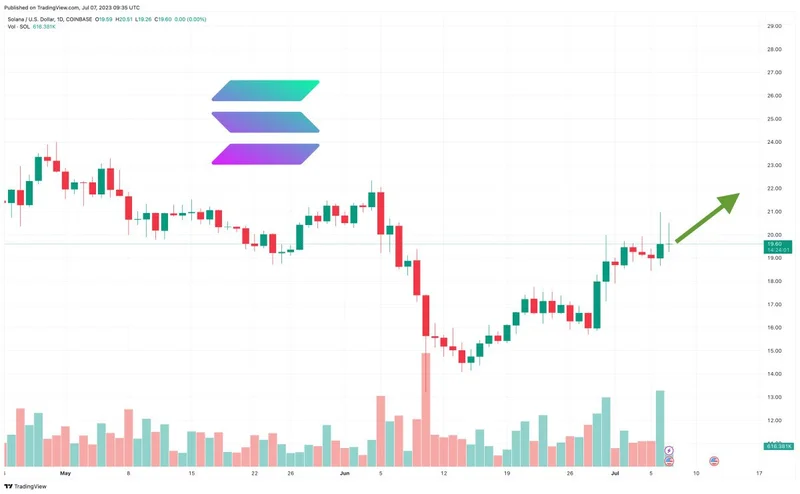
Solana's short-term outlook is undoubtedly bearish, but its long-term fundamentals are still touted as strong. The critical question is whether the $165 demand zone will hold. A Bitcoin rebound above $110,000 could provide a much-needed lift, but until then, SOL may continue consolidating, awaiting a clear breakout signal. What's missing from this analysis? A critical look at why Solana is underperforming relative to other Layer 1 solutions. Is it simply market sentiment, or are there deeper technological or adoption issues at play? I've looked at these charts for hours, and frankly, I'm still not sure.
Leverage: A Double-Edged Sword
The core issue here isn't just market volatility; it's excessive leverage. Traders betting big with borrowed funds are magnifying both their potential gains and their potential losses. The $1.27 billion liquidation figure isn't just a number; it represents real people losing real money. While liquidations can, theoretically, signal short-term bottoms, they also inflict significant pain and create uncertainty. Until the market can wean itself off of excessive leverage, these "clearing moments" will continue to be a recurring feature of the crypto landscape. As reported by Coindesk, traders lost over $1B in 24 hours as longs got crushed BTC, ETH, XRP , SOL News: Traders Lose Over $1B in 24 Hours as Longs Get Crushed.
The Market's Got a Fever, and the Only Prescription...
...is more data. We need more transparency around leverage ratios, liquidation triggers, and exchange risk management practices. Without this, the market will continue to be driven by speculation and fear, rather than informed investment decisions. Are regulators paying attention? One hopes so, but I wouldn't bet on it.
Is This Time Really Different?
Probably not. Market cycles are a constant in finance, and the crypto market is no exception. What goes up, must come down, and vice versa. The key is to understand the underlying dynamics at play—in this case, excessive leverage and thin liquidity—and to manage risk accordingly. The market is a fickle beast and the narrative can change in a heartbeat.
The Bulls Had it Coming
The $1.27 billion liquidation event wasn't a black swan; it was a predictable consequence of excessive risk-taking. The market needed a reset, and it got one. Whether this marks a true bottom or just a temporary reprieve remains to be seen. But one thing is clear: leverage is a dangerous game, and the house always wins in the end.
Tags: solana price
Ethereum: Dip Buying vs. Outflows
Next PostRepublicans' "Clear Momentum": What's Driving the Numbers?
Related Articles