
Warren Buffett Confronts the Musk Pay Paradigm: What His Warning Reveals About the Future of Innovation
The Trillion-Dollar Bet: Are We Witnessing the Birth of the Mission-Based CEO?
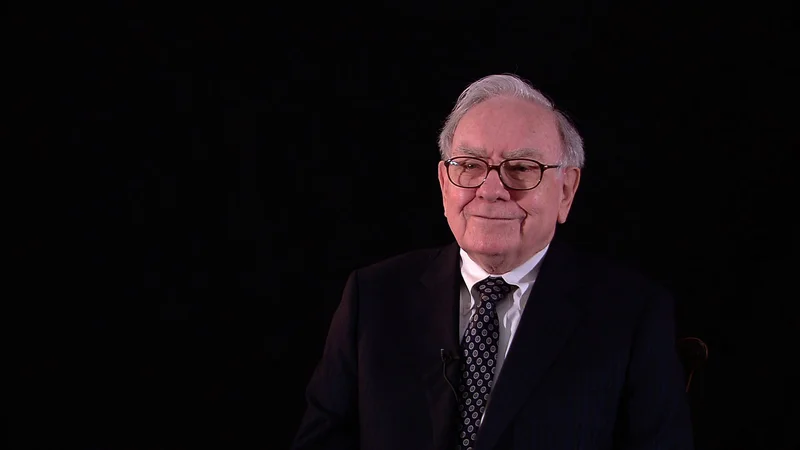
Let’s just get the numbers out of the way, because they are staggering. Elon Musk’s newly approved compensation package could, theoretically, be worth $1 trillion. Hot on its heels, Rivian’s CEO RJ Scaringe gets a plan valued at a potential $4.6 billion. The legendary Warren Buffett, from his famously modest Omaha perch, sees this and calls it what it looks like: a contagion of “envy and greed.”
And on the surface, he’s not wrong. The optics are terrible. CEO-to-worker pay ratios are exploding, climbing to a dizzying 632:1. When I first read the details of Musk's package, my initial reaction was the same as everyone else's: pure sticker shock. You see a number with that many zeroes, and your brain immediately files it under "obscene." It feels like a glitch in the system, a symptom of a late-capitalist fever dream.
But then I looked closer at the conditions, at the raw architecture of these deals, and I realized I wasn't just looking at a bigger paycheck. I was looking at something else entirely. A new blueprint. We're all so busy debating the morality of the number that we're missing the paradigm shift happening right under our noses. This isn't just about paying a CEO more; it's about fundamentally rewiring the very purpose of a CEO in the 21st century.
An Explorer's Bounty, Not a Captain's Salary
For sixty years, Warren Buffett has been the world’s greatest ship captain. He stands on the bridge of the S.S. Berkshire Hathaway, a vessel of immense and steady value, and he keeps it on course. He avoids storms, optimizes for efficiency, and delivers consistent, reliable returns. His $100,000 salary is the perfect wage for the world’s most dependable captain. We need captains. They are the bedrock of a stable economy.
But Elon Musk isn’t a captain. He’s an explorer, trying to chart a course to a new world.
This is the critical distinction we’re failing to make. These compensation packages aren't a salary, not in the way you and I think about it—in simpler terms, they’re a bounty. It's the modern equivalent of the Longitude Prize, the 18th-century British government's massive reward for anyone who could solve the problem of navigating at sea. They didn't offer a salary to a "Chief Navigation Officer"; they posted a giant prize for achieving the impossible, and in doing so, they unlocked a new era of global trade and exploration.
Musk’s package is contingent on Tesla reaching an $8.5 trillion market capitalization. Let that sink in. That’s not a reward for showing up and keeping the ship steady. It's a model that says if you can fundamentally reshape global transportation, transition the world's energy grid, pioneer scalable AI, and even set the stage for making humanity a multi-planetary species then the reward should be commensurate with that near-impossible achievement—it’s a breathtakingly audacious bet on a single individual’s vision. Scaringe's deal at Rivian is a smaller echo of the same principle: hit audacious targets in operations and cash flow, and you will be rewarded. Fail, and you get your base salary.
Is this a dangerous model if misapplied? Absolutely. Handing out lottery tickets to every CEO of a company that makes slightly better widgets would be a catastrophe. There's a profound responsibility here. But for the handful of companies genuinely trying to solve planet-altering problems, maybe, just maybe, this is the incentive structure we need. How else do you motivate someone to pour every waking second of their life into problems that are, by any rational measure, unsolvable?
The New Physics of Value Creation
The old guard, like the venerable Norges Investment Management, worries about the “total size of the award” and “key person risk.” These are valid concerns in the old universe, governed by the Newtonian physics of quarterly earnings and incremental growth. But we’re now entering a world of quantum economics, where value can be created in massive, unpredictable leaps.
Think about it. What is the "correct" compensation for the person who successfully commercializes fusion energy? Or the leader who builds the first true Artificial General Intelligence? The old formulas break down. The Buffett-era disclosure rules, which were meant to shame CEOs into moderation, have backfired spectacularly. As he himself notes, they just became a scoreboard for envy. Why? Because they were designed for a game that is slowly being replaced. The old game was about managing scarcity and capturing existing value. The new game is about creating abundance and inventing entirely new categories of value.
This is the kind of breakthrough that reminds me why I got into this field in the first place. We're not just building faster chips or sleeker apps; we're building new economic and social operating systems. These compensation structures, as controversial as they are, are a beta test for one of them. They are an experiment in aligning personal fortune with civilizational progress on a scale we've never seen before. Will it work? I don't know. But isn't it the most fascinating experiment in business today? What does it say about our future that we are even willing to run it?
This Isn't About Greed; It's About Gravity
Ultimately, the outrage over these numbers misses the point. This isn't a story about personal enrichment. It's a story about the immense gravitational pull of humanity's biggest challenges. Problems like sustainable energy, space exploration, and AI demand a force of equal or greater magnitude to overcome them. These moonshot compensation packages are an attempt to create that force—to focus unimaginable resources and a singular, obsessive will on a single point of failure. It's a high-stakes, high-risk, and deeply uncomfortable new model. But in a world facing existential threats, maybe uncomfortable is exactly what we need.
Tags: warren buffett
The Tech Surge: Decoding the Next Wave of Growth
Next PostConduent's Moment of Truth: Unpacking the Drop and Charting a Path Forward
Related Articles